How Smaller Memory Care Homes Enhance Engagement and Daily Living
Business Name: BeeHive Homes of Alamogordo
Address: 1106 San Cristo St, Alamogordo, NM 88310
Phone: (575) 215-3900
BeeHive Homes of Alamogordo
Beehive Homes assisted living care is ideal for those who value their independence but require help with some of the activities of daily living. Residents enjoy 24-hour support, private bedrooms with baths, medication monitoring, home-cooked meals, housekeeping and laundry services, social activities and outings, and daily physical and mental exercise opportunities. Beehive Homes memory care services accommodates the growing number of seniors affected by memory loss and dementia. Beehive Homes offers respite (short-term) care for your loved one should the need arise. Whether help is needed after a surgery or illness, for vacation coverage, or just a break from the routine, respite care provides you peace of mind for any length of stay.
1106 San Cristo St, Alamogordo, NM 88310
Business Hours
Families typically begin looking at memory care when something particular breaks down at home. A stove left on. Medications skipped or doubled. A front door opened at 3 a.m. With no awareness of risk.
The first places people tend to tour are big assisted living neighborhoods, since they show up, heavily marketed, respite care and typically situated on main roadways. Those buildings can be stunning, but many families leave thinking, "This feels like a hotel, not a home." When a person is living with dementia, that distinction matters even more than the décor.
Over the last years, I have seen a different model quietly show itself: small memory care homes tucked into residential communities, typically accredited as assisted living or similar residential care. Normally 6 to 16 residents, one cooking area, a small backyard, personnel who understand every household by name.
These smaller sized homes are not immediately much better than every big neighborhood, but they do have structural benefits for engagement, safety, and day to day lifestyle. The scale of the environment alters how individuals with dementia connect to their surroundings, to personnel, and to each other.
This article looks closely at how those smaller sized settings can enhance day-to-day living, when they are a good fit, and what trade offs households must anticipate compared to larger senior care options.
Why scale matters a lot in dementia care
Dementia slowly narrows an individual's ability to filter information. Noise, motion, visual clutter, even strong patterns in carpet and wallpaper can end up being complicated or overwhelming. What feels "vibrant" to a healthy adult can feel disorderly to somebody with mid phase dementia.
In a huge assisted living or memory care wing, a number of aspects converge:
Residents often walk long corridors that look comparable in every direction.
Dining rooms might serve 30 to 60 individuals at a time. Activities take on overhead statements, televisions, visitors, and passing personnel.For someone who has difficulty processing stimuli, that volume of input can cause withdrawal, agitation, or "exit looking for" habits. I have seen citizens in big neighborhoods invest most of their day parked in a corridor chair, partly because the environment itself is too complex to navigate.
In a smaller memory care home, the environment is streamlined without feeling institutional. There is usually one main living room, often visible from the table and kitchen. Staff and homeowners share the same areas, so there are less unknowns and fewer choices required simply to get through the morning.
That shift in scale changes what ends up being possible.
The feel of home and why it influences engagement
Familiarity is not a soft, emotional concept in dementia care. It is a functional tool. When the brain loses short term memory and complex reasoning, it leans more heavily on deeply deep-rooted patterns: the shape of a kitchen, the noise of meals, the ritual of making coffee or folding towels.
Smaller memory care homes can tap into those patterns in useful ways.
I keep in mind a lady I will call Marie, a previous grade school instructor who had lived alone after her partner died. She went into a large community first, with a well appointed memory care unit. Within two weeks, she had actually stopped changing clothing frequently and resisted going to the big dining room. Her chart started to show "refusals," and staff carefully suggested an antidepressant.
Her daughter moved her to a 10 bed home in a nearby area. The very first morning there, staff invited Marie to "help set up for breakfast." They handed her a stack of napkins and easy place mats. She required no guidelines. Within minutes she was humming to herself, setting out the table simply as she had done for years with her own family and students. That little act, in a home style dining-room, provided her a function instead of a passive seat at a restaurant size table.
In a smaller sized setting, engagement typically originates from this kind of ingrained chance, not just from set up activities. When staff can see and react to tiny openings for participation, you get:
Quieter mornings with natural discussion instead of yelled directions,
More movement without formal "exercise class," Meaningful jobs that feel like reality, not recreation.The physical scale of the home supports that. A team member in the cooking area can quickly see that a resident is roaming with agitated energy and reroute it into drying meals, watering outdoor patio plants, or sweeping a small walkway.
Large buildings can simulate home like aspects, but a genuine house sized space removes much of the artifice. Residents do not have to analyze an activity calendar or long passages to find something to do. Life is occurring right around them, and they can enter it.
Staffing patterns and relationships in smaller sized homes
The staffing model is where small memory care homes frequently diverge most sharply from standard assisted living.
In a big community, caregivers are usually appointed to many homeowners across multiple corridors. Dietary staff run the cooking area. Activities staff lead programs. Housekeeping personnel tidy spaces. That specialization has benefits, yet it can fragment relationships. Citizens may see a dozen deals with in a single afternoon, none of whom seem like "my person."
In a smaller sized home, the exact same staff usually use numerous hats. The caregiver who aids with bathing in the early morning may likewise sit at the table throughout lunch, load the dishwashing machine, then lead a simple music activity later on. That connection has a couple of effective results:
Families can reach the very same familiar employee to ask, "How did Mom actually do this week?" instead of hearing from whoever happens to be on duty.
Personnel notification subtle changes early, such as a slight shift in gait, new confusion at sunset, or a decrease in appetite. Locals experience fewer strangers touching them, which lowers anxiety during intimate care like bathing or toileting.I frequently tell households to listen for how staff speak about homeowners. In a little home, you are most likely to hear, "This is Mr. Jones. He likes his coffee strong and loves talking about his years in the Navy." In a large setting, the language can drift toward task based shorthand such as "She's a 2 individual transfer, requires complete assist."
Neither description is destructive. It is a reflection of scale and workflow. But for somebody living with dementia, being called an entire person is not simply mentally soothing, it directly improves care.
When staff understand histories carefully, they can use that understanding to defuse agitation and produce engagement. A caretaker who remembers that Mrs. Singh utilized to run a clothes boutique can welcome her to assist select outfits or fold headscarfs. That type of person focused engagement is easier to provide when 8 to 12 locals share a team of constant caregivers.
Daily rhythm in a smaller sized memory care home
The rhythm of the day typically tells you more about a memory care setting than any brochure.
In large assisted living or senior care neighborhoods, schedules tend to revolve around building wide systems: meal delivery to dozens of residents, group activity calendars, transport schedules, and staffing shift changes. The result is that homeowners must fit their lives around those systems.
In a small memory care home, personnel can flex the schedule around the locals. Breakfast may occur in waves for early risers and later on sleepers. If three locals consistently snooze finest after lunch, personnel can change care jobs so those hours stay safeguarded. You see fewer homeowners lined up in wheelchairs waiting on meals or showers, because there is merely less institutional machinery to feed.
One 8 bed home I worked with kept a basic white boards in the kitchen with each resident's preferred wake time, bathing pattern, and "best time of day." Personnel checked it as naturally as a grocery list. That board prevented a well implying caregiver from waking a night owl at 6:30 a.m. "to get a head start on the day," which could otherwise trigger a cycle of fatigue and agitation.
The home's little size likewise made versatile activities possible. When a resident with frontotemporal dementia ended up being agitated and loud during afternoons, personnel could shift a light treat and a walk into an earlier time, then use peaceful one to one time with earphones and familiar music throughout his most agitated hours. That individual change would be far harder in a building where one activities coordinator is responsible for 50 residents.
Rhythm affects engagement in both instructions. A calm, predictable circulation of the day makes it much easier for locals to participate. In turn, engaged citizens are less most likely to experience behavioral spikes that interrupt that stability.
Safety, wandering, and liberty of movement
Families frequently assume that a bigger, more protected memory care unit will be safer. The reasoning seems simple: more personnel, more cams, more controlled gain access to. The reality is subtler.
People with dementia need both security and autonomy. Excessive constraint, and they lose muscle strength, balance, and the sense that they have any control over their day. Excessive freedom in an environment they can not analyze, and they get lost, fall, or leave the structure without comprehending the risk.
Smaller homes often strike a workable balance. The physical footprint is much easier to navigate: a brief corridor, a visible living room, cooking area in the center, outside area just beyond glass doors. For homeowners who like to speed, staff can keep an eye on them almost continuously without resorting to alarms or locked interior doors.
I recall a gentleman who had been identified a "extreme elopement danger" at his prior big community. There, he consistently attempted to leave through the hectic front lobby, frequently when visitors were arriving. He was moved to a 12 resident memory care home with a fenced backyard and circular walking path. Because home, staff merely opened the back door. He could stroll loops outdoors for long stretches, return inside when prepared, and seldom approached the front door at all. His "elopement risk" turned out to be a basic requirement to walk with purpose in an environment that made good sense to him.
This is not to state smaller sized homes are constantly more secure. The model relies heavily on mindful personnel who comprehend dementia care. If staffing is thin, a single caretaker might still struggle to monitor kitchen tools, hot liquids, and outside areas. For that reason, families ought to not presume that "little" equals "safe and secure" without asking direct concerns about staffing ratios, training, and nighttime coverage.
Still, when succeeded, the design and visibility of a smaller sized home can offer both more secure roaming and more normal flexibility of motion than many bigger facilities are able to offer.
Emotional climate and social dynamics
The social fabric of a memory care home can either reinforce identity or erode it. In a large community, the large number of locals can develop inner circles, anonymous clusters of people sitting together without truly connecting, or a revolving door of next-door neighbors as people relocate and out.
In a smaller setting, the group tends to stabilize. Ten or twelve individuals, with a mix of cognitive and physical abilities, end up being familiar faces really quickly. While not everybody becomes friends, locals do acknowledge "their individuals."
I have seen a quiet sense of mutual viewing develop in these homes. One lady in early phase dementia would gently remind her neighbor with advanced illness to finish her soup or hold the hand rails en route to the bathroom. She might do this respectfully since they shared nearly every meal and lots of hours in the exact same living room. That continuity produced chances for natural peer assistance that structured "pal systems" typically stop working to achieve.
The other side is that a negative dynamic can also take stronger hold in a small setting. A resident who is very loud, physically aggressive, or susceptible to inappropriate remarks can affect the entire house, whereas a large building might have more options to separate or redirect that person.
This is among the trade offs households need to weigh. Smaller memory care homes frequently feel more intimate and mentally grounded, but they likewise have less ability to "hide" challenging behaviors. The crucial question to ask potential homes is how they handle those situations: Do they have access to mental health or dementia specialists? How do they support personnel emotionally? What requirements lead them to ask a resident to move to a higher level of care?
Medical care, treatments, and advanced needs
From a strictly medical viewpoint, little memory care homes and bigger assisted living or senior care neighborhoods face comparable constraints. Neither is a medical facility. Neither can replace knowledgeable nursing when a resident needs intensive injury care, complex feeding tubes, or constant medical monitoring.
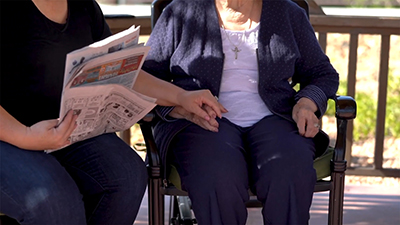

Where the difference typically appears is in how healthcare providers engage with the setting.
Physicians, nurse professionals, physiotherapists, and hospice companies checking out a small home regularly see the very same locals each time and come to know the staff well. Interaction lines shorten. When personnel report, "She has actually been more sleepy and less interested in food for 3 days," a company can rely on that observation as part of an ongoing relationship.
In huge buildings, company visits can feel more like medical rounds. Notes are left in electronic systems, messages go through multiple hands, and subtle patterns may be harder to spot amid the volume of data.
That stated, bigger neighborhoods frequently have more robust in house offerings: onsite clinics, regular treatment days, group workout led by certified instructors, and transport to professional visits. Little homes typically rely on outside providers who come into the home or families who organize transport individually.
Families need to think ahead about most likely trajectories. An individual in early or mid phase dementia who is otherwise fairly healthy can frequently do effectively in a small home for many years. Somebody with sophisticated heart failure, unrestrained diabetes, or a history of regular hospitalizations may eventually require the more powerful scientific infrastructure of a skilled nursing center, no matter cognitive status.
Smaller homes regularly partner with hospice or home health companies to bridge part of this gap. Hospice, in particular, can layer sign management, nursing oversight, and family assistance on top of the daily caregiving the home provides.
Cost, guidelines, and what families should ask
Cost comparisons in between little memory care homes and large assisted living neighborhoods vary extensively by region, but a few patterns recur.
Per month, numerous little homes fall in the same general range as dedicated memory care units within larger structures. They may be a little more or somewhat less expensive, depending upon local realty and staffing markets. What changes more noticeably is how the charge structure is built.
Some small homes use an "all inclusive" rate that covers space, board, and standard support with personal care. Others charge a base rate plus tiered care fees as requirements increase. Larger communities frequently lean heavily on tiered structures, where the preliminary price appears lower until families understand that almost every kind of dementia care, from medication management to incontinence support, activates an additional fee.
Regulatory structures also differ. Many little memory care homes operate under assisted living or residential care guidelines, which can differ from one state to another. In some regions, this permits a very home like environment with strong flexibility. In others, it can imply fewer mandated staffing requirements or less regular assessments than large centers face.
Families should not assume that every little home meets the very same expert requirements. The intimacy of the setting can conceal both quality and overlook. Careful concerns matter more than marketing language.
A short, focused list of concerns can help throughout tours:
-
Staffing and training
Inquire about personnel to resident ratios for days, nights, and nights, and how many personnel on each shift are totally trained in dementia care, not simply "oriented" to the house. -
Daily life and engagement
Demand particular examples of how citizens with various capabilities invest their early mornings and afternoons, including how the home involves those who no longer sign up with group activities however are still awake and alert. -
Medical coordination and emergencies
Learn which doctors or nurse specialists follow citizens, how typically they visit, and what happens if a resident's condition modifications all of a sudden during the night or on a weekend. -
Family communication
Ask how and when staff contact families about routine updates, minor issues, and severe incidents, and whether there is a single main contact for your loved one. -
Limits of care
Clarify what changes would prompt the home to advise transfer to a greater level of care, such as duplicated hospitalizations, aggressive habits, or innovative medical equipment.
Listening to how staff response these questions will inform you as much as the material itself. Expect concrete examples over vague assurances.
When a smaller sized memory care home is the right fit
No single model fits everyone with dementia. Still, there are patterns in who tends to prosper in smaller sized homes.
People who resided in modest homes and value personal privacy and routine frequently settle faster than in resort style senior care environments. Those who become overwhelmed by sound or crowds generally take advantage of the calmer scale. People who take pleasure in easy, hands on jobs like helping in the cooking area, folding laundry, or tending a small garden can discover day-to-day function more quickly when the home's size makes those activities noticeable and accessible.
Small homes can likewise be a mild shift for families who have been supplying care themselves and are wrestling with guilt. Instead of moving a relative into a large, unfamiliar complex, they are welcoming them into another home, with a smell of genuine cooking and the noise of a television in the background. That psychological bridge matters, both for the individual with dementia and for the family's long term relationship with the care team.
At the very same time, there are scenarios where a larger community or various level of dementia care may be much better:
A person who yearns for frequent outings, big group socializing, and high energy occasions may feel bored in a peaceful house setting.
Someone with high acuity medical requirements might require on website nursing that a lot of little homes can not provide. Households who prepare for needing short-term protection for minimal durations might choose bigger communities that explicitly promote respite care options.The essential action is to match the environment to the person's history, personality, and present phase of dementia, instead of to a generic idea of "the best" senior care.
Final ideas for families weighing their options
Choosing memory care is rarely a theoretical exercise. It happens after a fall, a wandering occurrence, or months of exhausted caregiving. Emotions run high, and the industry's shiny marketing can be confusing.
It assists to walk into each setting with a clear sense of what you are searching for: not just safety, however day-to-day engagement, human connection, and a rhythm of life that respects who your loved one has constantly been. Smaller memory care homes can master those locations specifically due to the fact that their size limits how institutional they can become.
Look past the furniture and paint colors. Watch how staff speak with residents, and how citizens react. Notification whether life seems to flow naturally, with small moments of purpose scattered through the day, or whether people mainly sit waiting for the next scheduled activity or meal.
Whether you choose a small home, a bigger assisted living neighborhood with a dedicated memory care system, or a mix of respite care and in home support along the way, the goal is the same: an every day life that feels understandable, safe, and quietly meaningful to the person living it.
BeeHive Homes of Alamogordo provides assisted living care
BeeHive Homes of Alamogordo provides memory care services
BeeHive Homes of Alamogordo provides respite care services
BeeHive Homes of Alamogordo supports assistance with bathing and grooming
BeeHive Homes of Alamogordo offers private bedrooms with private bathrooms
BeeHive Homes of Alamogordo provides medication monitoring and documentation
BeeHive Homes of Alamogordo serves dietitian-approved meals
BeeHive Homes of Alamogordo provides housekeeping services
BeeHive Homes of Alamogordo provides laundry services
BeeHive Homes of Alamogordo offers community dining and social engagement activities
BeeHive Homes of Alamogordo features life enrichment activities
BeeHive Homes of Alamogordo supports personal care assistance during meals and daily routines
BeeHive Homes of Alamogordo promotes frequent physical and mental exercise opportunities
BeeHive Homes of Alamogordo provides a home-like residential environment
BeeHive Homes of Alamogordo creates customized care plans as residents’ needs change
BeeHive Homes of Alamogordo assesses individual resident care needs
BeeHive Homes of Alamogordo accepts private pay and long-term care insurance
BeeHive Homes of Alamogordo assists qualified veterans with Aid and Attendance benefits
BeeHive Homes of Alamogordo encourages meaningful resident-to-staff relationships
BeeHive Homes of Alamogordo delivers compassionate, attentive senior care focused on dignity and comfort
BeeHive Homes of Alamogordo has a phone number of (575) 215-3900
BeeHive Homes of Alamogordo has an address of 1106 San Cristo St, Alamogordo, NM 88310
BeeHive Homes of Alamogordo has a website https://beehivehomes.com/locations/alamogordo/
BeeHive Homes of Alamogordo has Google Maps listing https://maps.app.goo.gl/ADjJ88EoCTadK58t5
BeeHive Homes of Alamogordo has Instagram page https://www.instagram.com/beehivealamogordo/
BeeHive Homes of Alamogordo has an YouTube page https://www.youtube.com/@WelcomeHomeBeeHiveHomes
BeeHive Homes of Alamogordo won Top Assisted Living Homes 2025
BeeHive Homes of Alamogordo earned Best Customer Service Award 2024
BeeHive Homes of Alamogordo placed 1st for Senior Living Communities 2025
People Also Ask about BeeHive Homes of Alamogordo
What is BeeHive Homes of Alamogordo Living monthly room rate?
The rate depends on the level of care that is needed. We do a pre-admission evaluation for each resident to determine the level of care needed. The monthly rate is based on this evaluation. There are no hidden costs or fees
Can residents stay in BeeHive Homes until the end of their life?
Usually yes. There are exceptions, such as when there are safety issues with the resident, or they need 24 hour skilled nursing services
Do we have a nurse on staff?
No, but each BeeHive Home has a consulting Nurse available 24 – 7. if nursing services are needed, a doctor can order home health to come into the home
What are BeeHive Homes’ visiting hours?
Visiting hours are adjusted to accommodate the families and the resident’s needs… just not too early or too late
Do we have couple’s rooms available?
Yes, each home has rooms designed to accommodate couples. Please ask about the availability of these rooms
Where is BeeHive Homes of Alamogordo located?
BeeHive Homes of Alamogordo is conveniently located at 1106 San Cristo St, Alamogordo, NM 88310. You can easily find directions on Google Maps or call at (575) 215-3900 Monday through Sunday 9:00am to 5:00pm
How can I contact BeeHive Homes of Alamogordo?
You can contact BeeHive Homes of Alamogordo by phone at: (575) 215-3900, visit their website at https://beehivehomes.com/locations/alamogordo/ or connect on social media via Instagram Facebook or YouTube
Conveniently located near Beehive Homes of Alamogordo Aviator 10 Allen Theatres a great movie theater with full food & drink menu. Catch a movie and enjoy some great food while you wait.